
Dr Jennifer Cook (PI) – @Jennifer_L_Cook
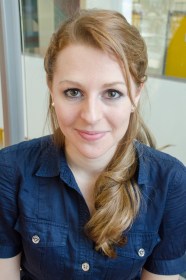
Jen completed her undergraduate degree in Psychology at the University of Bath in 2007. She then completed a Wellcome Trust-funded PhD in Neuroscience at University College London (2007-2011). This programme included a 3-year project, in Professor Sarah-Jayne Blakemore’s lab, investigating “Action observation and imitation in typical individuals and adults with Autism Spectrum Conditions”. Following this Jennifer joined Professor Barbara Sahakian’s group at the Department of Psychiatry, University of Cambridge (2011-2012). In Cambridge she researched novel methods of cognitive training and was also a Research Fellow of Magdalene College. Subsequently Jen moved to the Donder’s Institute in The Netherlands where she began to study social learning with Professor Roshan Cools. In 2014 Jennifer took up a lectureship at City University London where she continued to study social learning and began to extend these studies into the field of autism research. Jen has been a Birmingham Fellow at the University of Birmingham since September 2015 and is also Associate Editor of Psychology and Cognitive Neuroscience for Royal Society Open Science (https://royalsocietypublishing.org/journal/rsos)
Miss Molly Gracey (PhD student) – @MollyFGracey
 Molly completed her MSci in Pharmacology at the University of Manchester in 2020. Her Master’s degree involved researching the effects of exercise on rat models of schizophrenia, with a focus on the cognitive deficits that occur in schizophrenia. She has an interest in studying cognitive symptoms in both neurodegenerative diseases and psychiatric disorders. Molly is now completing a PhD supported by the Midlands Integrative Biosciences Training Partnership (MIBTP), a BBSRC-funded doctoral training programme. Her PhD aims to develop a mechanistic understanding of the role that dopamine plays in social cognition. These results will have important implications for individuals with Parkinson’s Disease.
Mr Dagmar Scott Fraser (Research Associate / PhD Student) – @dagmarfraser
 Dagmar Fraser holds a BEng(Hons) in Electronic Engineering and a MSc(Res) in Pattern Analysis & Neural Networks. Dagmar developed machine learning classifiers in industry, before exploring spiking in low-level auditory processing as Research Assistant, at Stirling University. He joined the School of Psychology at the University of Birmingham in 2007, as a Research Technician in the Sensorimotor Neuroscience Lab. As Research Fellow in Behavioural Synchrony 2014-15 he examined synchrony in human movement. He continues at the School as Research Technician, at the Centre for Human Brain Health.
In 2019-2021 Dagmar seconded as Research Programmer to the Cook Lab, developing experiments and analysis suites to characterise kinematics across neurodiverse / drug intervention cohorts. In September 2022 Dagmar rejoined the Cook Lab as part time Doctoral Researcher, and Research Associate. In his doctoral studies, Dagmar critically explores the One Third Power Law. This apparently universal Law – from bumblebees, to humans, to elephants – relates the velocity and curvature of biological movement. His work characterises subtle variations of this Power Law, across lifespan, neurotypes and in those with motor differences.
Dr Connor Keating (Postdoc) – @ConnorTKeating
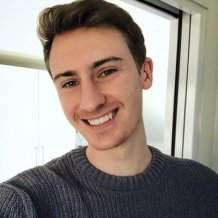 Connor completed his undergraduate degree in Psychology at the University of Birmingham in 2019. Whilst completing his degree, Connor worked as a Research Assistant in the Cook Lab and assisted with our research investigating facial movement kinematics. Connor completed a PhD supported by the Medical Research Council (MRC) doctoral development programme. His PhD explored the causes and consequences of deficits in social cognition within clinical populations with reference to motor function and interoception.
Given his experience volunteering with individuals with Autism Spectrum Disorder (ASD), Connor has a great interest in the relationship between movement and social ability in those with ASD.
Dr Michael Joe Munyua Gachomba (Research Fellow) – @MikeGacho
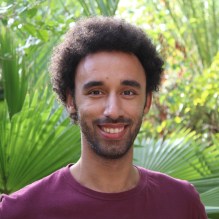 Michael completed a BSc and MSc in Molecular Biology at the University of Padova (Italy). He then undertook a PhD in Neuroscience at the Institute of Neuroscience of Alicante (Spain), under the supervision of Dr. Cristina Marquez and supported by La Caixa-INPhINIT Doctoral Fellowship programme. During his PhD, Michael studied how familiarity, sex and dominance modulate prosocial decision-making (i.e., decisions that benefit others) in rat dyads. His work combined behavioural experiments and quantitative methods for the analysis of animal social interactions, with a focus on body movement, gaze, and vocal signals. In January 2023, Michael joined the Cook Lab as a postdoctoral researcher and his current project investigates collective movement dymamics during exchange of social information in honeybee colonies.
Michael is interested in social behaviour and cognition in human and non-human animals. His research aims to study the dynamics of social interactions and communication in dyadic and group context to understand how they contribute to behavioral, cognitive and affective processes (e.g., prosocial behaviour, information exchange, social bonding).
Dr Lizzie Farrow (Research Fellow)
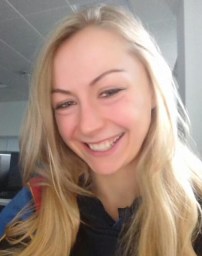 After completing a BSc in Physics and then an MA in Psychology at the University of Birmingham, Lizzie undertook a PhD in Psychology in Birmingham with the supervision of Dr Stephane De Brito. During the PhD she also spent time living in Germany and working with collaborators in Universitäts Klinikum Frankfurt at Goethe University. Her PhD research was supported by the Midlands Integrative Biosciences Training Partnership (MIBTP) and the work in Germany was supported by a short-term research grant from the German Academic Exchange Service (DAAD). MIBTP is a BBSRC-funded doctoral training programme which also involved specific training on statistics and computational analysis and masterclasses in practical bioscientific experimental techniques at Leicester and Warwick Universities. Lizzie’s PhD research involved analysing clinical, genetic and neuroimaging data from the FEMNAT-CD study in order to investigate the genetic, epigenetic and neuroimaging markers associated with conduct disorder and callous-unemotional traits in female adolescents.
Lizzie is currently working part-time as a postdoctoral researcher in the Cook Lab and spends the rest of her time working as an Assistant Psychologist at St Andrews Healthcare, Birmingham. Lizzie is interested in research into the biological mechanisms and neural correlates that underlie differences in socio-emotional functioning (particularly in relation to anti-social behaviour) and how this knowledge can inform clinical practice in psychiatric patients with complex needs and/or forensic histories.
CO-SUPERVISED
Miss Leila Iliffe (PhD student, co-supervised with Dr Sarah Beck and Dr Danielle Ropar)
Miss Laura Groves (PhD student, co-supervised with Professor Chris Oliver and Dr Jo Moss)
Miss Lucy Licence (PhD student co-supervised with Dr Caroline Richards)
ALUMNI
Dr Sophie Sowden (former Postdoc) – @Sophie_Sowden
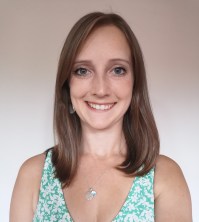 Sophie completed her Ph.D. under the supervision of Prof. Geoff Bird at the Institute of Psychiatry, Psychology & Neuroscience, King’s College London supported by a MRC studentship. Her research to date has concerned the neurocognitive basis of social behaviour, in particular how the ability to distinguish between the ‘self’ and ‘other(s)’, termed self-other control, may contribute to a range of social cognitive abilities. As a keen ballroom dancer, she has always been fascinated by the link between movement and cognition and therefore her current research focus is on understanding the relationship between motor and social behaviour and what this can reveal about individuals with Autism Spectrum Disorder and Parkinson’s disease. Sophie completed a 3 year postdoc in the Cook Lab and is now a Lecturer in the School of Psychology at the University of Birmingham.
Dr Alicia Rybicki (former Research Fellow) – @neuralicia
 Alicia completed a PhD in Psychology from the University of Birmingham in 2022, supervised by Dr Jennifer Cook. Her research was supported by the Midlands Integrative Biosciences Training Partnership (MIBTP), a BBSRC-funded doctoral training programme, and utilised computational approaches to understand motor and social learning, using computational modelling, neurogenetics and pharmacological interventions.
Alicia is currently a postdoctoral research fellow in the Motivated Cognition Lab at the Centre for Human Brain Health, University of Birmingham.
Dr Bianca Schuster (former PhD student) – @BiancaASchuster
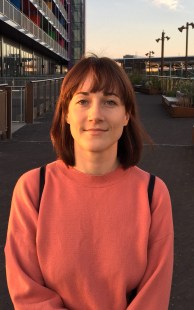
Bianca completed her ERC-funded Ph.D. project at the Cook Lab in December 2021. In her Ph.D. she used behavioural experiments in combination with psychopharmacology to investigate how a person’s ability to understand others is informed by their own movements and what role the neurotransmitter dopamine plays in this relationship. Bianca has been post-doctoral research fellow at Waseda University (Tokyo, Japan), exploring how movement differences between autistic and non-autistic people and Japanese and British cultures affect their bi-directional understanding. Currently, she is post-doctoral researcher at the SCAN-Unit, University of Vienna, where she studies processes underlying social cognition: neurochemical bases, bayesian inference and cross-cultural differences.
Dr Lydia Hickman (former PhD student) – @LydiaJHickman
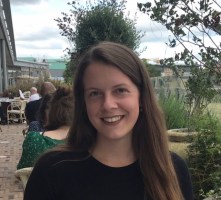
Lydia graduated from her undergraduate degree in Experimental Psychology at the University of Oxford in 2018. During her time at Oxford, she assisted with research in the Brain and Behaviour Research Group, Language and Cognitive Development Research Group, and Child and Adolescent Psychiatry. Lydia joined the Cook Lab in 2018 as an MSc by Research student focusing on the relationships between different measures of interoceptive ability. She completed a PhD supported by the Midlands Integrative Biosciences Training Partnership (MIBTP), a BBSRC-funded doctoral training programme. Her PhD explored the fundamental biological mechanisms underlying motor function and social cognition in the context of autism and Parkinson’s.
Holly O’Donoghue (former Lab Manager)
Holly gained a master’s in Neuroimaging from Cardiff University alongside her undergraduate degree in Psychology from Bangor University in 2016. During this time, she investigated the grey and white matter changes associated with cognition and aging using VBM. Holly started working in the Cook Lab as a Lab Manager in 2022.
Dr Hélio Clemente José Cuve (former Research Fellow) – @HCuve
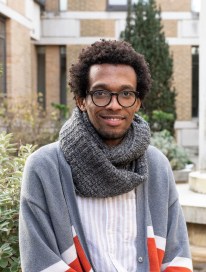 Hélio completed his PhD in Experimental Psychology from the University of Oxford in 2021, supervised by Prof Geoff Bird and supported by a Medical Sciences Division Studentship jointly awarded by the Clarendon Fund, and Kendrew Fund (St Johns College). His research seeks to understand the socio-cognitive mechanisms that support typical and atypical face-to-face interactions abilities. Specifically, the ability to access the inner world of others’ emotions, thoughts, and mental states by observing and responding to their behaviour (gaze, face/body movement, kinematics, etc.).
In 2022, Hélio joined the University of Birmingham after being awarded the first Experimental Psychology Society Postdoctoral Fellowship. In collaboration with Dr Jen Cook and Prof Rachael Jack, his work has been developing a formal ‘spatiotemporal face-space’, a theoretical model to account and explain the dimensions that allow the perception and signalling of rich, dynamic social cues via face movements. Hélio’s future work seeks to integrate experimental research on social cognition, face/body movement, vision, and action to understand how people successfully navigate face-to-face interactions in real-world social networks (groups) and hope to generate insights that may help develop interventions for those who struggle (e.g., people with autism, depression).
During his free time, Hélio is passionate about music creation, with a background in sound engineering, he enjoys time with synthesizers, drum machines, Ableton and gadgets with shiny buttons.
Dr Jelka Stojanov (former postdoc) – @JelkaStojanov
 Jelka completed her PhD in Experimental Psychology at the University of Oxford. Her PhD research sought to understand the role of emotions in intergroup relations and conflict, with a particular focus on empathy. She was a Postdoctoral Research Fellow in the Cook Lab (University of Birmingham) between November 2022 and October 2023 and her postdoctoral project examined the socio-cognitive building blocks of cultural learning in humans. Since November 2023, Jelka is a Policy Advisor in the Work & Equalities unit of the Behavioural Insights Team, where she focuses on improving diversity, equity, and inclusion in the workplace and the labour market.
Dr Rosy Edey (former PhD student, co-supervised with Dr Clare Press)
Dr Tilman Lesch (former PhD student, co-supervised with Professor Barbara Sahakian)
Dr Supriya Malik (former postdoc)
Ms Katherine Ellis (former postdoc)
COLLABORATORS
Dr Clare Press, Birkbeck College, University of London, UK
Dr Geoff Bird, University of Oxford, UK
Professor Roshan Cools, Donders Centre for Cognitive Neuroimaging, The Netherlands
Dr Hanneke den Ouden, Donders Institute for Brain, Cognition and Behaviour, The Netherlands
Professor Gene Robinson, University of Illinois at Urbana-Champaign, USA
Dr Paul O’Reilly, King’s College London, UK
Dr Sebastian Gaigg, City, University of London, UK
 jencooklab.com